


introduction
The creation of websites has evolved rapidly since the artificial intelligence revolution in 2022. Today, with chatbots and AI-assisted programming tools integrated into development flows, building a functional site is simpler than ever. However, when it comes to incorporating advanced features such as maps, there are still key technical decisions that impact the final experience.
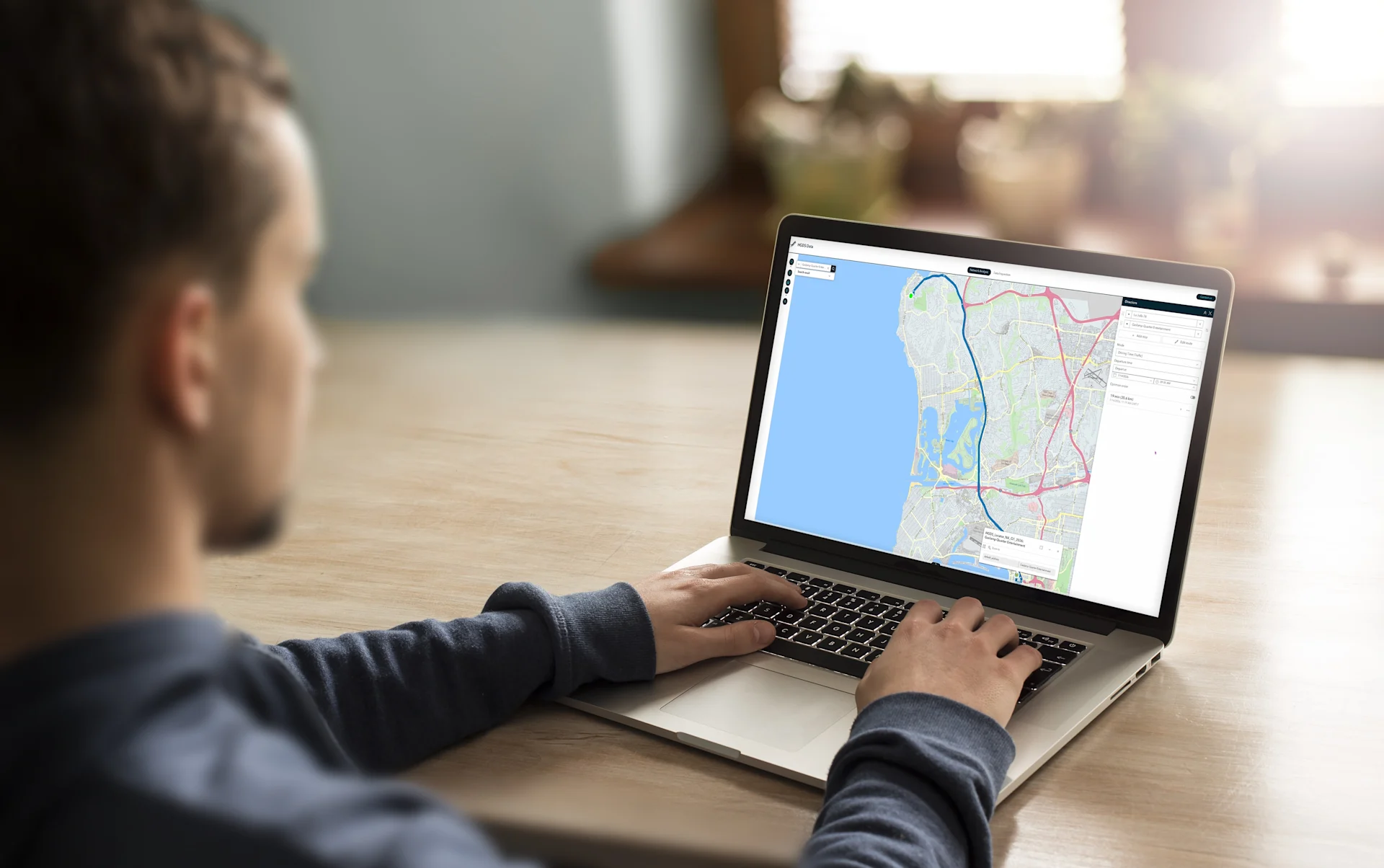
In this article, we analyze how simple it is to integrate HERE Maps on a website in 2026, reviewing the available options, the role of artificial intelligence in development and the importance of using updated APIs and official documentation.
The evolution of map integration on the web
This analysis takes as a reference a technical example from HERE originally published in 2020, showing how to add maps to a website from scratch. At the time, the process involved greater complexity and longer development times.
Today, thanks to more mature APIs and the support of AI-based tools, map integration is considerably more agile. However, this simplification does not eliminate the need to fully understand the technologies involved.
Static maps: an option in effect in 2026
Los static maps continue to be a valid and widely used alternative, especially in cases where advanced interaction is not required.
Through the HERE Map Image API, it is possible to integrate maps into a website using a simple tag<img>, defining parameters such as location, zoom level, size and visual style.
This approach is ideal for:
- Institutional sites
- Landing pages
- Information or contact pages
In addition to their rapid implementation, static maps offer excellent visual quality with low impact on site performance.
Interactive maps with Maps API for JavaScript
When the project requires a higher level of interaction, HERE offers the Maps API for JavaScript, which allows you to create dynamic maps with multiple functionalities.
Its key capabilities include:
- User interaction with the map
- Custom bookmarks
- Traffic layers and satellite view
- Advanced controls and events
The most recent versions use the rendering engine HARP, which enables modern styles such as Explore and allows you to view traffic and incident information in real time.
Info Bubbles and user experience
One of the most used features in interactive maps is the incorporation of Info Bubbles, informational windows that are activated when interacting with a bookmark.
These allow us to display contextual information, such as addresses, schedules or relevant data about a point of interest, improving the user experience and facilitating navigation in retail sites, branches, logistics centers or field services.
Routing and route calculation
La HERE Routing API allows you to integrate advanced routing functions directly into the map, including:
- Obtaining the user's location using the browser
- Calculation of routes to one or more destinations
- Comparison of travel times
- Visualization of the optimal route on the map
This type of integration is key for use cases related to logistics, transport, mobility and operations in the territory.
Artificial Intelligence and Development: Advantages and Limits
Artificial intelligence tools allow you to generate code base quickly and facilitate access to functional examples. However, during the tests, it was detected that some code fragments generated by chatbots use obsolete versions of the APIs.
This reinforces a fundamental point:
The official HERE documentation remains the most reliable source to implement up-to-date, stable solutions aligned with best practices.
AI speeds up the development process, but it doesn't replace technical validation or the judgment of specialized teams.

Conclusion
In 2026, integrating maps into a website is faster and more accessible than ever. What used to take days of development can now be solved in a few hours, depending on the level of functionality required.
However, to achieve scalable and robust solutions, it is essential to combine:
- Reliable APIs such as those from HERE
- Good Development Practices
- Updated documentation
- Constant technical validation
At Marker, we accompany companies in this process, helping them to incorporate location intelligence into their digital platforms to improve user experience and operational efficiency.